A Family’s Story of Heroin Addiction and Recovery Support
Read a family's journey through heroin and injection drug addiction, the importance of listening, and recovery support at Jan Sudhar Nasha Mukti Kendra Varanasi
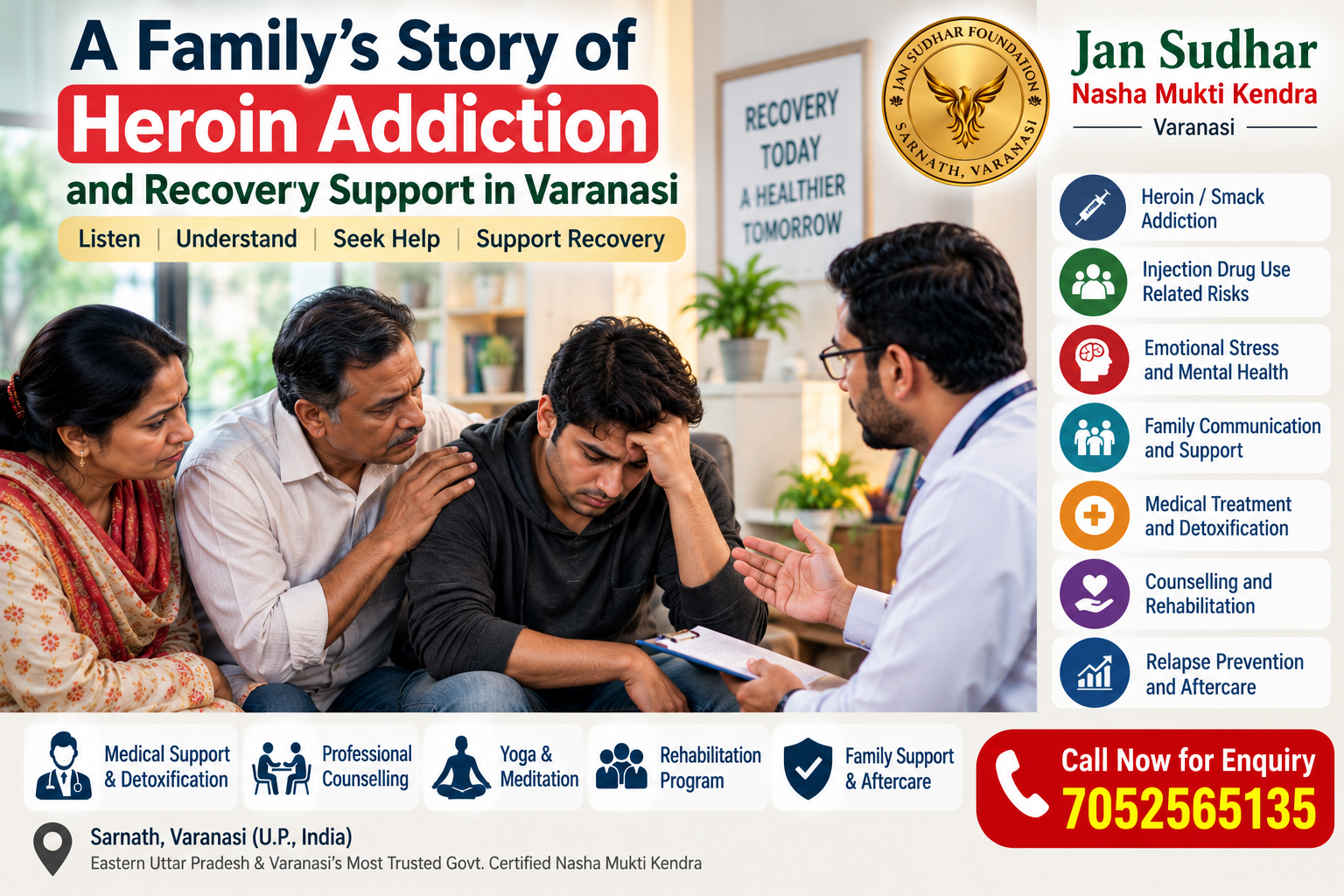
A Family’s Story of Heroin Addiction and Recovery Support in Varanasi
Behind Every Addiction, There May Be a Story That Needs to Be Heard
Sometimes, the deepest struggles within a family remain hidden until the situation becomes difficult to manage. A parent may be busy earning a living, a child may feel unheard, and communication may gradually become less frequent. When emotional difficulties remain unaddressed, some individuals may turn toward harmful coping mechanisms, including alcohol or drug use.
This is not the story of one person alone. It is a reminder that addiction affects individuals, families and relationships—and that understanding the problem is an important step toward seeking help.
At Jan Sudhar Nasha Mukti Kendra Varanasi, we believe that people experiencing addiction deserve dignity, compassionate support and access to appropriate professional care. Every person's circumstances are different, and recovery begins with understanding their needs rather than judging their past.
A Family From Bikramganj, Rohtas, Bihar Seeks Help
Recently, our team received a request for assistance from a family in Bikramganj, Rohtas, Bihar. The family was concerned about a young man who had been struggling with heroin, locally known as smack, and injection drug use.
During conversations with the family, they described difficulties in communication and spending time together because of work commitments. According to their account, the young man had tried to express his concerns, but the family did not fully understand the seriousness of his emotional struggles at the time.
As the situation developed, substance use became a major concern for the family. They eventually sought professional assistance because they were worried about his safety and well-being.
This experience highlights an important lesson for every family: listening to a loved one, noticing changes in behaviour and seeking help early can make a meaningful difference. However, addiction is complex and cannot be attributed to a single family circumstance or event.
When Heroin and Injection Drug Use Become a Serious Concern
Heroin is a highly addictive opioid. Injection drug use can create additional health risks, including skin and soft-tissue infections, abscesses and blood-borne infections such as hepatitis B, hepatitis C and HIV when contaminated equipment is shared.
The family reported that the young man had been injecting drugs. When our team reached Bikramganj following the family's request for assistance, they found that he was preparing to inject again. The team intervened and brought him back with the aim of helping him access further support.
The family also noticed multiple dark marks around his injection sites. Such marks can have different causes, and their appearance alone cannot establish whether an infection or another medical complication is present.
Injection-related wounds, swelling, redness, increasing pain, fever or discharge should be assessed by a qualified healthcare professional. Medical evaluation is also important for considering appropriate screening and treatment for possible infections.
Behind these physical signs is a person who needs care—not humiliation, rejection or labels that reduce him to his addiction.
Why Listening to Children and Young Adults Matters
Parents often work hard to provide financial security, education and a better future for their children. Their responsibilities can be demanding, and they may not always recognise when a child is struggling emotionally.
At the same time, children and young adults need more than material support. They also need opportunities to speak openly, feel understood and ask for help without fear of being dismissed.
When a young person repeatedly tries to communicate distress, changes in behaviour or difficulties with substance use should not automatically be treated as disobedience or bad character. A calm conversation can help families understand what is happening and decide whether professional support is needed.
This does not mean that parents are solely responsible for addiction. Substance use disorders develop through a combination of biological, psychological, social and environmental factors. Family communication is one important part of a much broader picture.
The lesson is simple: make time to listen, ask questions without immediately judging, and take serious concerns about substance use seriously.
Why Injection Drug Addiction Requires Professional Medical Attention
Heroin and other opioid dependence can involve powerful cravings, physical dependence and difficult withdrawal symptoms. Injection drug use also creates risks that may not be visible from the outside.
Treatment should begin with an appropriate medical assessment. Depending on the person's condition, a qualified clinician may recommend wound care, infection screening, withdrawal management, medication-based treatment for opioid use disorder, counselling or other appropriate interventions.
Opioid withdrawal can cause significant distress and may involve muscle aches, sweating, restlessness, nausea, diarrhoea, anxiety and sleep problems. Although withdrawal is not usually fatal by itself, complications such as dehydration and other health conditions can require medical care. The risk of overdose is also a serious concern, particularly if a person returns to opioid use after tolerance has decreased.
If a person becomes unconscious, cannot be awakened or has slow or difficult breathing after possible opioid use, seek emergency medical help immediately. Do not wait for a rehabilitation appointment.
The Importance of Compassionate Addiction Rehabilitation
Addiction treatment is not simply about asking someone to stop using a substance. A comprehensive approach considers physical health, psychological needs, family circumstances and the risk of returning to substance use.
Depending on the individual's needs and available qualified services, treatment may involve:
Medical assessment and appropriate clinical care
Wound assessment and infection screening when indicated
Evidence-based treatment for opioid use disorder
Individual counselling and psychological support
Family education and counselling
Relapse-prevention planning
Continuing care and follow-up support
The right plan depends on the person's clinical assessment. No single programme or treatment approach is suitable for everyone, and detoxification alone is not a complete treatment for opioid use disorder.
Families should ask treatment providers about medical supervision, qualified professionals, emergency arrangements, treatment options and continuing support before making a decision.
Jan Sudhar Nasha Mukti Kendra Varanasi: Supporting Families Seeking Help
Jan Sudhar Nasha Mukti Kendra Varanasi, located in Sarnath, Varanasi, can be contacted by families enquiring about addiction rehabilitation support and available services.
For families travelling from Bihar or other parts of eastern Uttar Pradesh, discussing the person's medical condition, the support available and the appropriate next steps before arranging admission is important.
Treatment needs should always guide the decision. Someone with an acute medical emergency, serious injection-related infection or suspected overdose needs urgent medical attention rather than being transported solely for routine rehabilitation.
Our message to families is that asking for help is not a failure. It is a practical step toward understanding a difficult situation and exploring appropriate care.
A Message to Parents: Your Time and Attention Matter
Dear parents, your hard work and sacrifices for your children matter. But alongside providing for their future, remember to make room for conversations about their present.
Ask how they are feeling. Notice when their behaviour changes. Listen when they tell you that something is wrong. If they are struggling with alcohol or drugs, try to approach the situation with concern and seek qualified professional guidance rather than relying only on punishment or promises.
A single conversation cannot solve every problem, and no family can prevent every difficulty. Yet consistent communication, appropriate boundaries and timely support can help create an environment in which a young person feels safer asking for help.
To anyone struggling with addiction: your current circumstances do not define your entire future. You deserve respectful care, and it is possible to ask for help without being reduced to your past mistakes.
Take the First Step Toward Addiction Recovery
If someone in your family is struggling with heroin, smack, injection drug use or another substance-related problem, do not ignore the warning signs. Seek a qualified medical assessment and ask about suitable treatment and rehabilitation options.
Contact Jan Sudhar Nasha Mukti Kendra Varanasi to enquire about available addiction rehabilitation services, the assessment process and the next steps for your family.
Call: 7052565135
A compassionate response, accurate medical guidance and a suitable treatment plan can help families move from fear and uncertainty toward informed decisions and continued support.
Jan Sudhar Nasha Mukti Kendra Varanasi — encouraging families to listen, seek appropriate help and support the journey toward recovery.
Supervised by qualified psychiatrists, clinical psychologists & detox specialists in Varanasi.