Yoga & Meditation for Recovery in Varanasi
How yoga and meditation support addiction recovery in Varanasi—safe detox, mind healing, daily routine at Jan Sudhar Nasha Mukti Kendra, Sarnath.
Yoga and Meditation for Addiction Recovery in Varanasi: A Practical Guide for Families
Addiction does not only affect the body. It changes sleep, mood, relationships, and the way a person responds to stress. In Varanasi and Sarnath, many families search for a Nasha Mukti Kendra that offers more than medicines alone. They want a place where medical detox is supported by counselling, structure, and habits that last after discharge.
Yoga and meditation are not a replacement for doctor-supervised treatment. Used correctly, they become a strong support during rehabilitation—especially for alcohol, smack, ganja, opium, and other substance dependencies. This article explains how these practices fit into recovery, what a typical day can look like, and how Jan Sudhar Nasha Mukti Kendra in Sarnasi approaches mind–body healing with clinical care.
Why the mind needs training during recovery
After detox, the body starts to stabilise, but the mind often remains restless. Cravings, guilt, anger, and fear of relapse are common. Without tools to manage these feelings, the risk of returning to substances increases.
Yoga and meditation help in three practical ways:
- Breath and nervous system – Slow breathing reduces the fight-or-flight response that many people feel during withdrawal and early recovery.
- Body awareness – Gentle asanas reconnect the person with physical sensations in a safe way, instead of using substances to escape discomfort.
- Attention training – Meditation builds the skill of noticing a craving without immediately acting on it.
At a serious rehab centre, these sessions run under a fixed routine, not as random “wellness” activities. Consistency matters more than difficult postures.
Medical detox first, then holistic support
Safe recovery always starts with medically supervised detox when needed. Alcohol and opioid withdrawal can be dangerous without clinical monitoring. Doctors and nurses manage symptoms, hydration, sleep, and related health issues.
Only after the person is medically stable do deeper psychological and lifestyle programmes work well. That is why quality centres in Varanasi combine:
- 24/7 medical supervision
- Psychiatric and counselling support
- Cognitive behavioural approaches
- Family counselling
- Yoga, pranayama, and meditation
- Nutrition and daily discipline
Yoga does not “cure” addiction by itself. It supports the brain and body while counselling addresses triggers, trauma, and relapse patterns.
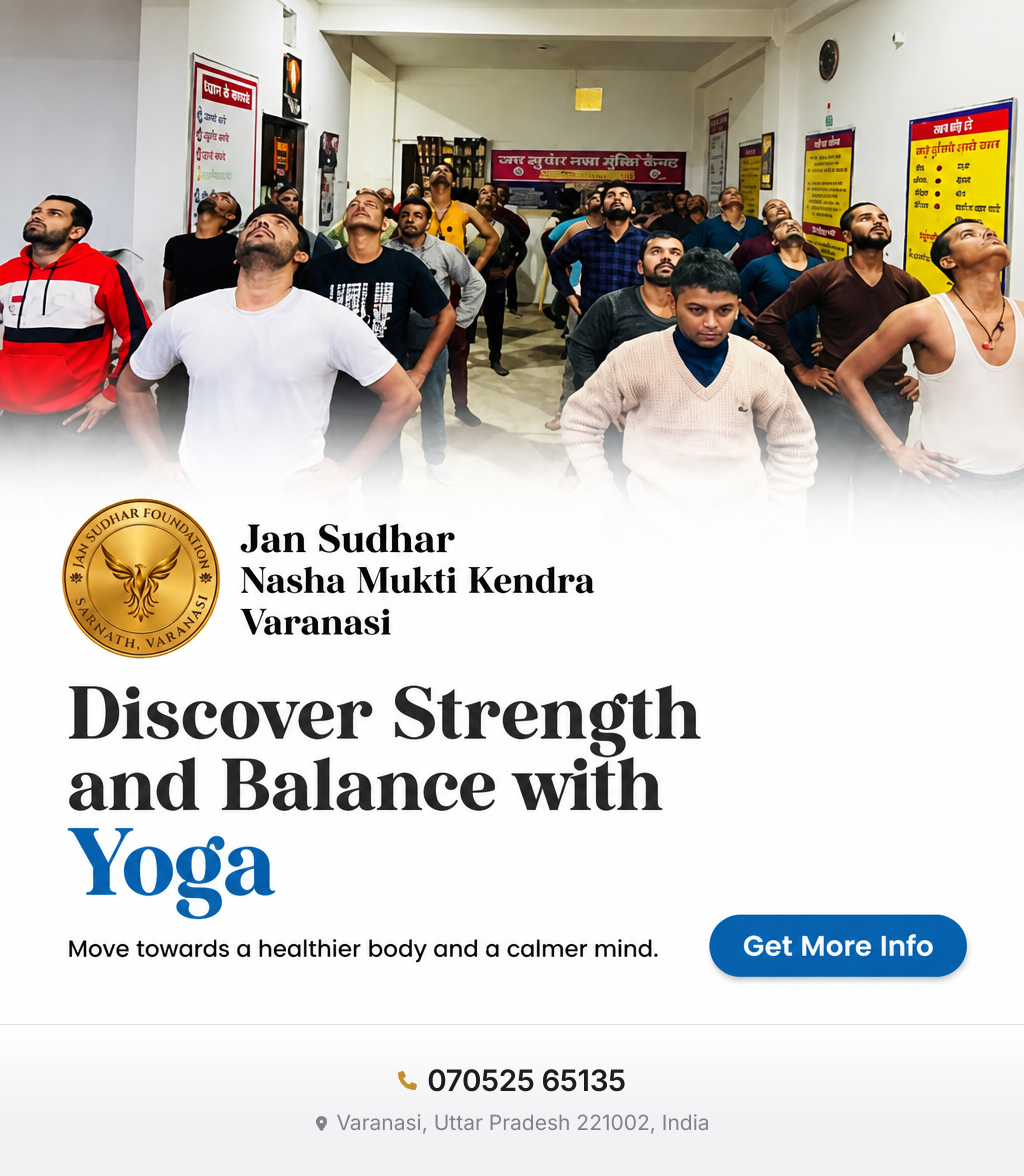
What a recovery-focused yoga session looks like
In a rehabilitation setting, yoga is adapted for patients who may be weak, anxious, or new to exercise. A typical session may include:
- Simple warm-ups to reduce stiffness after long periods of inactivity
- Gentle asanas that improve posture, digestion, and sleep
- Pranayama (breathing practices) to calm the mind
- Short relaxation at the end
The goal is not competition or advanced poses. The goal is regularity, safety, and a sense of control. Over weeks, many patients report better sleep, less irritability, and improved focus in counselling sessions.
Meditation and craving control
Cravings often feel sudden and overwhelming. Meditation teaches a different response: notice the urge, name it, breathe, and wait for the intensity to pass. This is a skill, not a slogan.
Helpful approaches in rehab include:
- Breath awareness for 5–10 minutes
- Body scan to release tension
- Guided reflection after group therapy
- Mindfulness in daily tasks—eating, walking, evening routine
When combined with professional counselling, meditation reduces the gap between impulse and action. That gap is where recovery decisions are made.
Daily routine: the real engine of change
Families often ask, “How long will treatment take?” Duration depends on the substance, health, and psychological needs—often in the range of a few months. What matters every day is structure.
A recovery-friendly day may include:
- Morning hygiene and light exercise or yoga
- Breakfast and medication as prescribed
- Individual or group counselling
- Rest and reading or indoor activities
- Evening meditation or reflection
- Early sleep routine
This structure replaces the chaos that addiction creates. Yoga and meditation fit inside the routine so they become habits, not one-time events.
Nutrition and sattvic support
Physical recovery needs food that is easy to digest and steady for energy. Many centres emphasise clean, balanced vegetarian meals prepared with hygiene and clinical guidance. Regular meal times, hydration, and avoiding stimulants support both detox and mental clarity.
When the body is nourished, patients tolerate counselling and physical activity better. Small improvements—appetite returning, better energy—build confidence.
Family role in long-term recovery
Addiction affects the whole family. Guardians need clear information: how detox works, what confidentiality means, how visits are arranged, and how to support without enabling.
Useful family actions include:
- Keeping communication calm and consistent
- Avoiding blame during early recovery
- Following the centre’s visit and phone guidelines
- Planning a safe home environment after discharge
- Supporting aftercare and follow-up appointments
Centres that offer guardian updates and structured aftercare help families stay involved in a healthy way.
Choosing a Nasha Mukti Kendra in Varanasi
When families compare options in Varanasi or Sarnath, they should look beyond marketing lines. Practical checks:
- Is care doctor-supervised, especially for detox?
- Are counselling and psychiatric support available?
- Is the environment secure, clean, and respectful?
- Is patient privacy protected?
- Is there a clear programme: detox → therapy → routine → aftercare?
- Can guardians get updates through a defined process?
Jan Sudhar Nasha Mukti Kendra, located at Varanasi, Uttar Pradesh 221007, focuses on govt.-aligned certification values (including 12A & 80G context for the organisation), 24/7 helpline support, medical detox, counselling, and holistic activities such as yoga and meditation as part of a broader recovery plan—not as a standalone promise.
Helpline: +91-7052565135 (confidential enquiry for admission and guidance).
Aftercare: where yoga still matters
Discharge is not the end of recovery. Relapse risk is real when stress, old friends, or unstructured free time return. Aftercare may include:
- Follow-up counselling
- Family sessions
- Continued breathing or short daily yoga at home
- Healthy routine and work or study plans
A person who has practised sitting with discomfort for a few minutes during rehab is better prepared for difficult days outside. That is the long-term value of meditation training.
A realistic message for patients and families
Recovery is not a straight line. Some days are better than others. What works is a combination of medical safety, psychological work, respectful care, and daily habits. Yoga and meditation strengthen those habits when they are guided, regular, and matched to the patient’s stage of recovery.
If you are searching for support for alcohol or drug addiction in Varanasi, start with a confidential conversation with a clinical team. Ask about detox safety, counselling methods, daily schedule, and aftercare. The right questions lead to safer decisions for the person you care about.
Jan Sudhar Nasha Mukti Kendra
Sarnath, Varanasi · 24/7 help: 7052565135
For guidance on admission, medical detox, counselling, and recovery-oriented routines including yoga and meditation.
Supervised by qualified psychiatrists, clinical psychologists & detox specialists in Varanasi.